---
title: "How To Find A Leak In A Shower Cubicle: Step-By-Step Guide"
description: Learn how to find a leak in a shower cubicle with practical step-by-step checks, from visual inspection to water testing, and prevent costly hidden damage.
image: https://blog.advanced-showers.com/hubfs/How-To-Find-A-Leak-In-A-Shower-Cubicle.png
---
[](https://www.advanced-showers.com/)
[tel:01483%20532020](tel:01483%20532020)
Call Us [02476 101 303](tel:02476101303)
#### Here you'll find the latest news updates from Advanced Showers
# How To Find A Leak In A Shower Cubicle?
Posted by [Mark Peers](https://blog.advanced-showers.com/author/mark-peers)
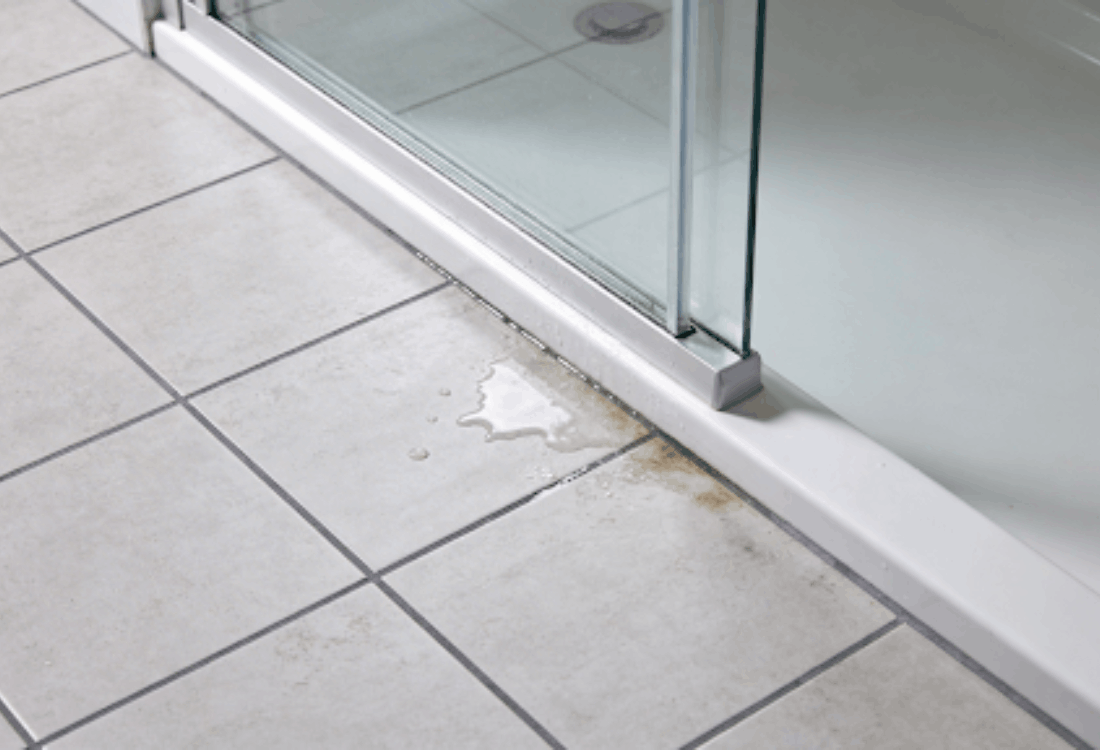
A leaking shower is one of the most common and costly problems in domestic and commercial properties. The tricky part isn't always fixing the leak, it's finding it in the first place. Knowing [how to find a leak in a shower cubicle](https://blog.advanced-showers.com/the-home-builders-guide-to-shower-pods) before it causes serious structural damage could save you a great deal of time, money, and disruption.
[](https://cta-redirect.hubspot.com/cta/redirect/3072522/ccce1c23-f1a1-4255-b100-80104f97b48a)
## Why Shower Cubicle Leaks Are Hard To Spot
Shower leaks are notoriously difficult to locate because water doesn't always travel in a straight line. A drip entering through a cracked grout line on the wall might not appear until it's soaked through the wall cavity, run down a timber joist, and emerged as a [damp patch](https://blog.advanced-showers.com/damp-and-mould-awareness) several feet away from the source. By the time visible signs appear, the leak may have been ongoing for weeks or months. Understanding how to find a leak in a shower cubicle requires a methodical approach, ruling out possible causes one by one.
## Step 1: Look For Visual Clues
Start with a thorough visual inspection of the shower itself. Look for:
- Cracked, missing, or discoloured grout, particularly at the base of walls and around the tray.
- Mould or mildew forming along silicone or mastic joints, a sign of persistent moisture.
- Gaps or lifting at the edges of the shower tray.
- Any areas where panels or tiles appear slightly loose or have shifted.
- Damp or staining on the outside of the shower enclosure, or on adjacent walls and flooring.
These visual cues often point you towards the general area of the problem, even if they don't pinpoint the exact source.
## Step 2: Conduct A Water Test
One of the most reliable methods for how to find a leak in a shower cubicle is a controlled water test. Here's how to do it:
1. Dry the entire shower area thoroughly and wait for it to be completely dry.
2. Plug the shower tray drain and fill it with a few centimetres of water.
3. Leave for 20 to 30 minutes without running the shower, then check for any seepage outside the tray.
4. If no leak is found from the tray, drain it and run the shower normally, directing water at different areas, walls, corners, the door frame while checking externally for signs of water.
This approach helps distinguish between a leak from the tray itself, the wall panels, or the door seals, essential information for knowing how to find a leak in a shower cubicle accurately.
## Step 3: Check The Plumbing
Not all shower leaks come from the enclosure itself. Loose connections at the showerhead, a faulty shower valve, or worn pipe fittings can all allow water to escape, sometimes into wall cavities where it's invisible. If your water test shows no sign of a tray or wall leak, inspect the plumbing next. Look for moisture around the valve, pipe connections, and the point where the supply enters the wall.
## Step 4: Look Externally
Check the room below the bathroom, or the wall on the other side of the shower, for damp patches, peeling paint, or water stains. These external signs are often the first indicator that a leak exists and can help you narrow down its location when you're figuring out how to find a leak in a shower cubicle.
Moisture meters, available from most hardware shops, can be pressed against walls to detect hidden dampness behind plasterboard or tiles, a useful tool when the source isn't obvious.
## Step 5: Call In A Professional
If you've worked through these steps and still can't locate the source, a professional plumber or leak detection specialist may use thermal imaging cameras to identify moisture behind surfaces without the need for destructive investigation. This is often more cost effective than tearing out tiles on the basis of guesswork.
## Why Leaks Keep Recurring In Traditional Cubicles
Traditional shower cubicles have multiple potential failure points: grout lines between tiles, silicone seals around the tray, mastic at panel joints, and door seals that degrade over time. Even after a leak is repaired, the same stresses, building movement, temperature changes, cleaning chemicals, act on the new material, and the cycle begins again.
## The Leak-Proof Alternative
If you're repeatedly asking [how to find a leak in a shower cubicle](https://blog.advanced-showers.com/the-home-builders-guide-to-shower-pods) because problems keep recurring, it may be time to consider a different approach altogether. [Advanced Showers pods ](https://blog.advanced-showers.com/shower-pods-for-modern-builds)remove every traditional leak point. The one-piece tray and lower wall system, combined with gasket-sealed sections rather than sealant joints, means there is simply no route for water to escape. No mastic. No grout. No silicone. No leak.
## Contact Advanced Showers
If you're dealing with a leaking shower cubicle and need expert advice, [get in touch with Advanced Showers today. ](https://www.advanced-showers.com/contact-us/)Our team can help you understand your options and recommend the best long-term solution for your property. Visit our website or call us to speak with a specialist.
[](https://cta-redirect.hubspot.com/cta/redirect/3072522/4876affe-c696-4158-8b03-128af5d4bec6)
[ See More News
](https://blog.advanced-showers.com)
### Follow Us
[](https://cta-redirect.hubspot.com/cta/redirect/3072522/2572bc43-c846-4adc-a3aa-772951f42b38)
### Subscribe to Email Updates
[](https://cta-redirect.hubspot.com/cta/redirect/3072522/75ce139c-87db-41b7-aef3-216f4fd6f26c)
### Recent Posts
[](https://cta-redirect.hubspot.com/cta/redirect/3072522/f47ca75d-80a7-4b13-b5a9-fcdd47667b74)
### Posts by Topic
- [Shower Pods (213)](https://blog.advanced-showers.com/topic/shower-pods)
- [Leak Proof Shower Pods (64)](https://blog.advanced-showers.com/topic/leak-proof-shower-pods)
- [Hygienic Showers (50)](https://blog.advanced-showers.com/topic/hygienic-showers)
- [Shower Cubicles (48)](https://blog.advanced-showers.com/topic/shower-cubicles)
- [Shower Pods For Student Housing (46)](https://blog.advanced-showers.com/topic/shower-pods-for-student-housing)
- [Commercial Shower Pods (38)](https://blog.advanced-showers.com/topic/commercial-shower-pods)
- [New Builds (17)](https://blog.advanced-showers.com/topic/new-builds)
- [Fibreglass Shower Pods (12)](https://blog.advanced-showers.com/topic/fibreglass-shower-pods)
- [Case Studies (5)](https://blog.advanced-showers.com/topic/case-studies)
- [Limited Mobility Users (3)](https://blog.advanced-showers.com/topic/limited-mobility-users)
- [Offers (3)](https://blog.advanced-showers.com/topic/offers)
- [Insider (2)](https://blog.advanced-showers.com/topic/insider)
- [Shower Moulds (1)](https://blog.advanced-showers.com/topic/shower-moulds)
[see all](https://blog.advanced-showers.com/how-to-find-shower-cubicle-leak#)
[](https://cta-redirect.hubspot.com/cta/redirect/3072522/932e139a-762a-4262-a8db-66b483e1bc40)
Search this site on Google
Search Google
### Leakproof Guarantee
- [Products](https://www.advanced-showers.com/products/shower-pods/)
- [Case Studies](https://www.advanced-showers.com/case-studies/)
- [About](https://www.advanced-showers.com/about/)
- [Where To Buy](https://www.advanced-showers.com/where-to-buy/)
- [Blog ](https://blog.advanced-showers.com/)
- [Contact Us](https://www.advanced-showers.com/contact-us/)
- [Our Brochure](https://blog.advanced-showers.com/advanced-showers-brochure-request)
- [Corner Pods](https://www.advanced-showers.com/categories/corner-pods/)
- [Alcove Pods](https://www.advanced-showers.com/categories/alcove-pods/)
- [Bespoke Showers](https://www.advanced-showers.com/product/bespoke-showers/)
- [Sectors We Work In](https://www.advanced-showers.com/sectors-we-work-in/)
[
Our Brochure
](https://blog.advanced-showers.com/advanced-showers-brochure-request)
Advanced Showers is a trading brand of Advanced Laminates Limited
Unit 2 Alpha Business Park
Deedmore Road
Coventry
Warwickshire
CV2 1EQ
Company number 6132867 Registered office as above
Advanced Showers © Copyright 2023 All Rights Reserved
Website by [Red Ant Solutions](http://www.redantsolutions.com)
- [Site Map](https://www.advanced-showers.com/sitemap_index.xml) |
- [Privacy Policy](https://www.advanced-showers.com/privacy-policy/) |
- [Terms & Conditions](https://blog.advanced-showers.com/how-to-find-shower-cubicle-leak#)

```json
{
"@context" : "https://schema.org",
"@type" : "BlogPosting",
"author" : {
"@type" : "Person",
"name" : "Mark Peers",
"url" : "https://blog.advanced-showers.com/author/mark-peers"
},
"dateModified" : "2026-02-27T14:15:53.000Z",
"datePublished" : "2026-02-04T10:00:00.000Z",
"headline" : "How To Find A Leak In A Shower Cubicle: Step-By-Step Guide",
"image" : [ "https://blog.advanced-showers.com/hubfs/How-To-Find-A-Leak-In-A-Shower-Cubicle.png" ],
"mainEntityOfPage" : {
"@id" : "https://blog.advanced-showers.com/how-to-find-shower-cubicle-leak",
"@type" : "WebPage"
},
"publisher" : {
"@type" : "Organization",
"logo" : {
"@type" : "ImageObject",
"url" : "https://blog.advanced-showers.com/hubfs/AdvancedShowers-Apr2017/Image/logo%20(1).png"
},
"name" : "Advanced Laminates Ltd."
}
}
```