---
title: "How To Prevent Mould In Shower Cubicles: An Expert Guide"
description: Discover how to prevent mould in shower cubicles with practical ventilation, cleaning and maintenance tips, plus long-term solutions to stop it returning.
image: https://blog.advanced-showers.com/hubfs/How-To-Prevent-Mould-In-Shower-Cubicles.png
---
[](https://www.advanced-showers.com/)
[tel:01483%20532020](tel:01483%20532020)
Call Us [02476 101 303](tel:02476101303)
#### Here you'll find the latest news updates from Advanced Showers
# How To Prevent Mould In Shower Cubicles
Posted by [Mark Peers](https://blog.advanced-showers.com/author/mark-peers)
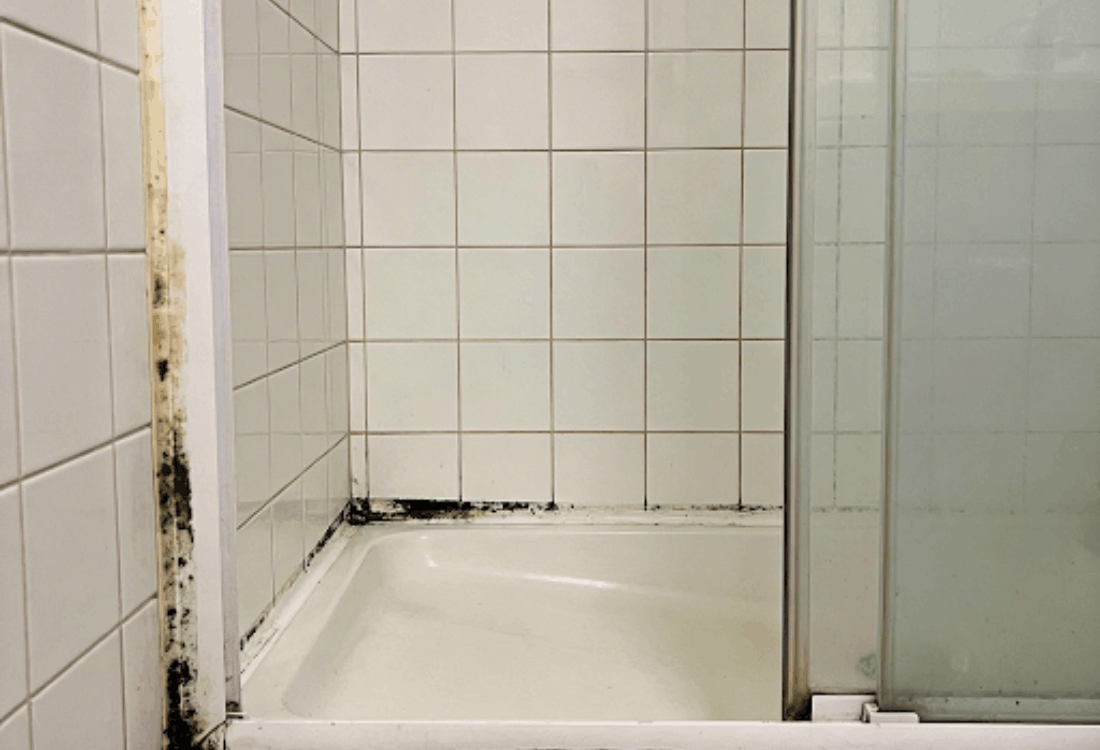
Mould in the shower is a problem that most homeowners, landlords, and facilities managers will face at some point. But it isn't inevitable. With the right approach and the right shower it can be stopped before it starts. Here's a complete guide on [how to prevent mould in shower cubicle environments,](https://www.advanced-showers.com/shower-mould/) from daily habits to long-term design choices.
[](https://cta-redirect.hubspot.com/cta/redirect/3072522/ccce1c23-f1a1-4255-b100-80104f97b48a)
## Why Mould Appears In Shower Cubicles
Before exploring how to prevent mould in shower cubicle settings, it's useful to understand the conditions that allow it to thrive. Mould requires three things: moisture, warmth, and a surface to grow on. [Shower cubicles](https://blog.advanced-showers.com/remove-shower-cubicle-black-mould) provide all three in abundance.
In traditional tiled showers, grout lines and silicone or mastic joints are the most vulnerable surfaces. Both are porous and absorb moisture during each shower. If they don't dry out completely between uses which is difficult in a busy bathroom, mould spores settle and begin to grow. Once established, mould can penetrate deep into grout and sealant, making it very difficult to remove completely.
## Ventilation: Your First Line Of Defence
Consistent, effective ventilation is the single most important factor in how to prevent mould in shower cubicle spaces. Steam from a hot shower rapidly saturates the air with moisture, which then settles on every surface walls, ceiling, grout, sealant, and glass.
To reduce this:
- Always run the extractor fan during and for at least 15-20 minutes after every shower
- Open a window if possible to allow damp air to escape
- If your extractor fan is old or underperforming, consider upgrading to a humidity sensing model that activates automatically and runs until moisture levels normalise
Poor ventilation is the root cause of many mould problems. Improving it is the simplest and cheapest step in how to prevent mould in shower cubicle environments.
## Wipe Down After Every Use
Steam and water droplets left on shower surfaces are the moisture source that mould needs. Developing a habit of wiping down walls, the tray, and glass after every shower significantly reduces this.
A squeegee on a hook inside the cubicle makes this fast and easy. This one habit, consistently applied, makes a substantial difference in how to prevent mould in shower cubicle spaces particularly on glass panels and tiles where water pools and dries slowly.
## Regular Cleaning With Anti Mould Products
Regular preventative cleaning is more effective than reactive treatment. Use an antimould bathroom spray on grout lines, silicone joints, and corners two to three times a week, even when mould isn't yet visible. This disrupts spore development before it becomes a visible problem.
For those who prefer natural products, undiluted white vinegar applied to grout and joints is an effective preventative agent. The mild acidity inhibits mould growth without the need for harsh chemicals.
## Fix Leaks And Hidden Moisture
Hidden moisture is a significant factor in how to prevent mould in shower cubicle environments. A small leak behind a panel, under the tray, or at a pipe joint creates a permanently damp area that no amount of surface cleaning will resolve. Inspect seals, check the tray for movement, and address any drips from the showerhead or valve promptly.
Damp patches appearing on walls adjacent to the shower, or a persistent musty smell even after cleaning, are indicators that moisture is getting into the structure and should be investigated as soon as possible.
## Choose The Right Shower Design
All of the above tips are effective, but they are management strategies ways of compensating for the limitations of traditional shower design. The most powerful approach to how to prevent mould in shower cubicle environments is to choose a shower that doesn't create the conditions for mould in the first place.
[Advanced Showers pods ](https://blog.advanced-showers.com/mould-vs-mould-repellent-shower-pods)have no grout, no mastic, and no silicone joints. The seamless, nonporous GRP surface doesn't absorb moisture, doesn't provide a habitat for mould spores, and doesn't require the ongoing cleaning and treatment that traditional showers demand. Water simply beads off the surface and runs away, rather than being absorbed into porous materials where mould can take hold.
For homeowners, landlords, and developers who want to understand [how to prevent mould in shower cubicle settings](https://www.advanced-showers.com/shower-mould/) once and for all, a shower pod is the definitive answer. It removes the conditions that create the problem, rather than requiring ongoing effort to manage them.
## Contact Advanced Showers
If you're ready to invest in a mouldproof shower solution for your home, rental, or development project,[ get in touch with Advanced Showers. ](https://www.advanced-showers.com/contact-us/)Visit our website to [download our free guide, ](https://blog.advanced-showers.com/the-home-builders-guide-to-shower-pods)explore the full product range, or contact our team for tailored advice and a fast, accurate quote.
[](https://cta-redirect.hubspot.com/cta/redirect/3072522/4876affe-c696-4158-8b03-128af5d4bec6)
[ See More News
](https://blog.advanced-showers.com)
### Follow Us
[](https://cta-redirect.hubspot.com/cta/redirect/3072522/2572bc43-c846-4adc-a3aa-772951f42b38)
### Subscribe to Email Updates
[](https://cta-redirect.hubspot.com/cta/redirect/3072522/75ce139c-87db-41b7-aef3-216f4fd6f26c)
### Recent Posts
[](https://cta-redirect.hubspot.com/cta/redirect/3072522/f47ca75d-80a7-4b13-b5a9-fcdd47667b74)
### Posts by Topic
- [Shower Pods (213)](https://blog.advanced-showers.com/topic/shower-pods)
- [Leak Proof Shower Pods (64)](https://blog.advanced-showers.com/topic/leak-proof-shower-pods)
- [Hygienic Showers (50)](https://blog.advanced-showers.com/topic/hygienic-showers)
- [Shower Cubicles (48)](https://blog.advanced-showers.com/topic/shower-cubicles)
- [Shower Pods For Student Housing (46)](https://blog.advanced-showers.com/topic/shower-pods-for-student-housing)
- [Commercial Shower Pods (38)](https://blog.advanced-showers.com/topic/commercial-shower-pods)
- [New Builds (17)](https://blog.advanced-showers.com/topic/new-builds)
- [Fibreglass Shower Pods (12)](https://blog.advanced-showers.com/topic/fibreglass-shower-pods)
- [Case Studies (5)](https://blog.advanced-showers.com/topic/case-studies)
- [Limited Mobility Users (3)](https://blog.advanced-showers.com/topic/limited-mobility-users)
- [Offers (3)](https://blog.advanced-showers.com/topic/offers)
- [Insider (2)](https://blog.advanced-showers.com/topic/insider)
- [Shower Moulds (1)](https://blog.advanced-showers.com/topic/shower-moulds)
[see all](https://blog.advanced-showers.com/how-to-prevent-mould-shower-cubicles#)
[](https://cta-redirect.hubspot.com/cta/redirect/3072522/932e139a-762a-4262-a8db-66b483e1bc40)
Search this site on Google
Search Google
### Leakproof Guarantee
- [Products](https://www.advanced-showers.com/products/shower-pods/)
- [Case Studies](https://www.advanced-showers.com/case-studies/)
- [About](https://www.advanced-showers.com/about/)
- [Where To Buy](https://www.advanced-showers.com/where-to-buy/)
- [Blog ](https://blog.advanced-showers.com/)
- [Contact Us](https://www.advanced-showers.com/contact-us/)
- [Our Brochure](https://blog.advanced-showers.com/advanced-showers-brochure-request)
- [Corner Pods](https://www.advanced-showers.com/categories/corner-pods/)
- [Alcove Pods](https://www.advanced-showers.com/categories/alcove-pods/)
- [Bespoke Showers](https://www.advanced-showers.com/product/bespoke-showers/)
- [Sectors We Work In](https://www.advanced-showers.com/sectors-we-work-in/)
[
Our Brochure
](https://blog.advanced-showers.com/advanced-showers-brochure-request)
Advanced Showers is a trading brand of Advanced Laminates Limited
Unit 2 Alpha Business Park
Deedmore Road
Coventry
Warwickshire
CV2 1EQ
Company number 6132867 Registered office as above
Advanced Showers © Copyright 2023 All Rights Reserved
Website by [Red Ant Solutions](http://www.redantsolutions.com)
- [Site Map](https://www.advanced-showers.com/sitemap_index.xml) |
- [Privacy Policy](https://www.advanced-showers.com/privacy-policy/) |
- [Terms & Conditions](https://blog.advanced-showers.com/how-to-prevent-mould-shower-cubicles#)

```json
{
"@context" : "https://schema.org",
"@type" : "BlogPosting",
"author" : {
"@type" : "Person",
"name" : "Mark Peers",
"url" : "https://blog.advanced-showers.com/author/mark-peers"
},
"dateModified" : "2026-03-04T10:00:00.263Z",
"datePublished" : "2026-03-04T10:00:00.000Z",
"headline" : "How To Prevent Mould In Shower Cubicles: An Expert Guide",
"image" : [ "https://blog.advanced-showers.com/hubfs/How-To-Prevent-Mould-In-Shower-Cubicles.png" ],
"mainEntityOfPage" : {
"@id" : "https://blog.advanced-showers.com/how-to-prevent-mould-shower-cubicles",
"@type" : "WebPage"
},
"publisher" : {
"@type" : "Organization",
"logo" : {
"@type" : "ImageObject",
"url" : "https://blog.advanced-showers.com/hubfs/AdvancedShowers-Apr2017/Image/logo%20(1).png"
},
"name" : "Advanced Laminates Ltd."
}
}
```